Cutting-Edge IoT in Warehouse Automation
Selected theme: Cutting-Edge IoT in Warehouse Automation. Step into a world where sensors, edge intelligence, and autonomous fleets turn aisles into living systems that think, learn, and self-correct. Explore stories, practical playbooks, and bold ideas—then subscribe to stay ahead of the next operational breakthrough.

Sensor Constellations: Seeing Every Shelf and Pallet
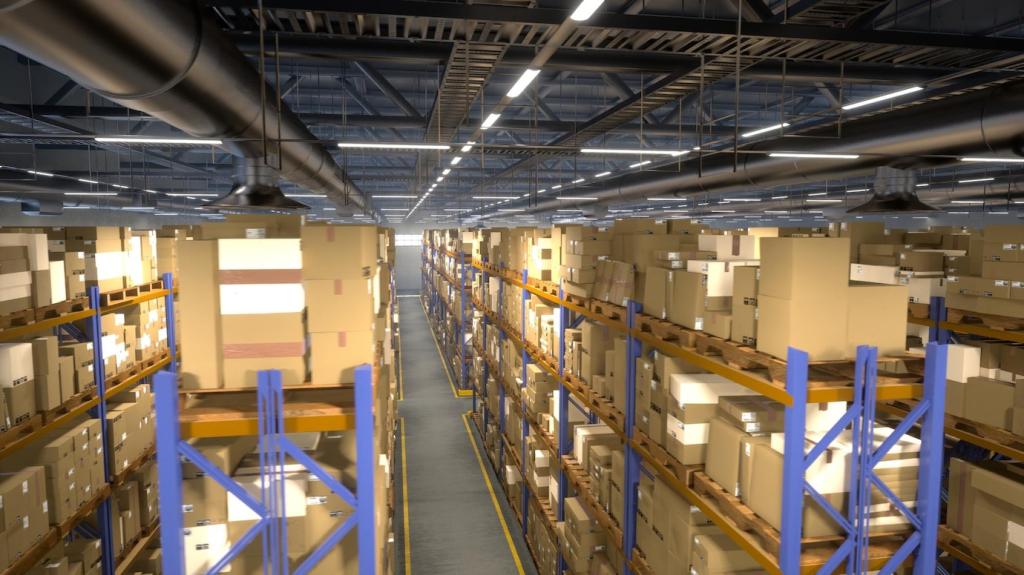
When ultra-wideband triangulates location, RFID confirms identity, and BLE beacons broadcast context, you gain a high-definition picture of inventory in motion. This multi-sensor fusion reduces counting errors, speeds cycle counts, and unlocks real-time slotting suggestions that actively prevent congestion and labor bottlenecks before they form.
Edge Computing and Real-Time Decisions
From Cloud-Only to Hybrid Edge
Cloud remains the system of record, but edge nodes run routing, congestion control, and safety checks locally. When the network hiccups, operations continue. Later, nodes batch insights to the cloud for training models, closing the loop between centralized learning and on-site, always-on decision making.
Latency as a First-Class KPI
Measure the milliseconds between a sensor event and a corrective action, not just tasks per hour. Tuning message brokers, prioritizing QoS, and pinning critical services to local edge clusters can shave precious time, turning near misses into non-events and keeping throughput predictably high during peak demand.
Pilot a Microservice at the Dock
Spin up a small edge microservice that reorders scanning tasks dynamically based on inbound trailer profiles. Watch how queue latency shifts, document the operational impact, and share results with our readers. If you try it, post your architecture sketch and lessons learned to spark a practical discussion.
Vehicle-to-Everything Inside the Warehouse
AMRs broadcast location, payload, and intent while fixed beacons update aisle conditions, allowing vehicles to negotiate priority in real time. This V2X-style choreography prevents gridlock at intersections and enables dynamic detours during hot picks, reducing travel distance and improving human-robot collaboration on crowded floors.
Battery Health and Smart Charging
IoT battery telemetry tracks temperature, depth of discharge, and charge cycles to predict degradation. Pairing that data with shift schedules lets the fleet manager schedule top-ups precisely, preventing mid-task drops. Readers have reported quieter nights, fewer emergency swaps, and better utilization rates when charging is algorithmically coordinated.
Subscriber Challenge: Map a Shadow Route
Create a ‘shadow’ AMR route that mirrors your busiest path and collect collision-avoidance and idle-time metrics for a week. Compare the data before making any changes, then test a revised route. Share your before-and-after charts with us and inspire fellow operators to fine-tune their traffic plans.
Predictive Maintenance and Digital Twins
Twin the Conveyor, Not Just the Line
A digital twin should capture speeds, vibration signatures, motor temperatures, sensor thresholds, and even lubrication cycles. When a belt deviates from its historical rhythm, the twin highlights drift. Maintenance teams can simulate adjustments virtually before committing tools, cutting diagnosis time and scheduling repairs for the least disruptive window.

Connectivity Fabric: 5G, Wi‑Fi 6E, and LPWAN
Private 5G for High-Density Robotics
Private 5G offers predictable latency, network slicing, and roaming across large facilities. It shines where dozens of robots compete for airtime. Pair it with an on-prem core and edge compute to keep control loops local, ensuring motion commands and safety messages arrive reliably even during peak shifts.
Wi‑Fi 6E and Deterministic Aisles
Wi‑Fi 6E adds spectrum breathing room for scanners, tablets, and cameras. With proper site surveys, directional antennas, and channel plans, you can create deterministic aisles where retries plummet. Operators report snappier picking confirmations and smoother video analytics without starving other business-critical traffic on the network.
LPWAN for the Slow but Vital
Not every device needs megabits. Pallet trackers, temperature loggers, and door sensors thrive on LPWAN, sipping battery for months while delivering reliable telemetry. Use LPWAN to extend coverage to yards and annexes, then comment with your favorite tip for balancing payload size, airtime limits, and reporting cadence.
Treat every device as untrusted by default. Enforce mutual authentication, certificate rotation, and least-privilege access per sensor type. Microsegment traffic so a compromised camera cannot talk to a conveyor controller. The result is freedom to experiment without allowing one weak link to jeopardize critical safety or uptime.
Security and Governance by Design
Maintain a software bill of materials for each device, track vulnerabilities, and schedule updates during quiet windows. If a patch requires a reboot, edge orchestration can stagger restarts to avoid operational gaps. Tell us how you balance urgency and stability when a critical CVE lands mid-peak season.
Security and Governance by Design